We're using cookies to ensure you get the best experience on our website. More info
Understood

Roo

@roobixcubes • Registered August 2, 2026 • Active 3 weeks, 4 days ago
6 Replies made

From David:

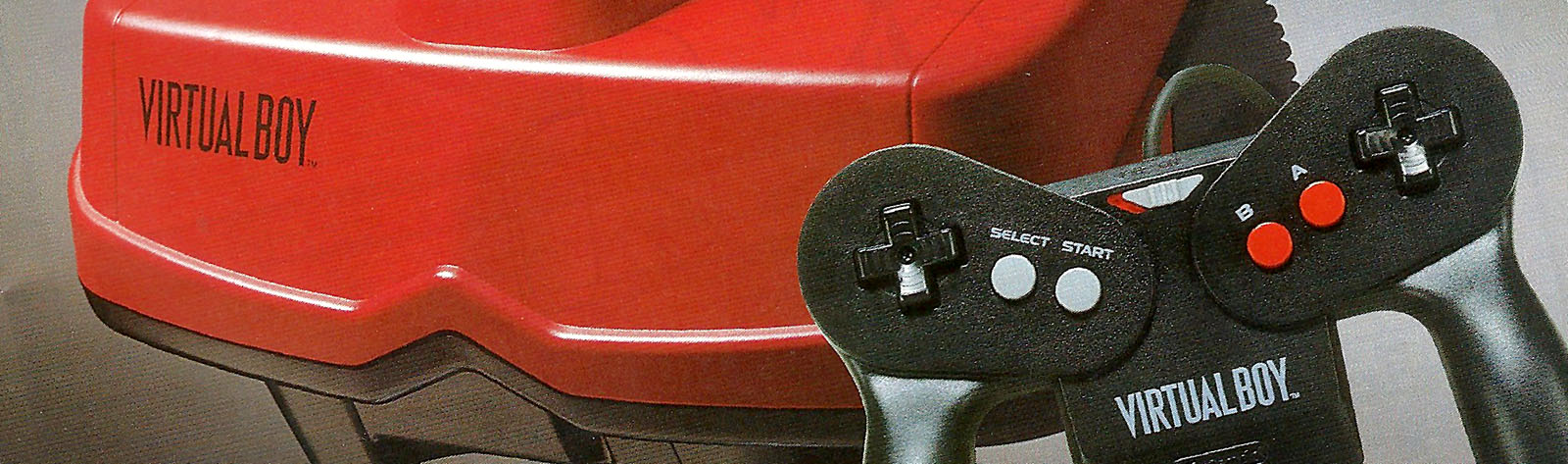
For the Virtual Boy Kiosks, I believe that was when I was associated with Schutz. HOWEVER, our head of design. Ron Eckert, was the father of Mike Eckert who was one of our outside vendors at that time and if memory serves Mike WAS the designer of the VB kiosk, but only as a Schutz vendor. Actually, Mike designed most if not all of my Nintendo kiosk work right from the start.

From David:
All of the Nintendo programs I spearheaded with Schutz were successful, to put it mildly, EXCEPT Virtual Boy, which was an almost immediate flop.
I worked on Super Nintendo, Nintendo 64, Virtual Boy, The Starlight Foundation kiosks, and was associated tangentially with World of Nintendo, Game Boy, etc

I do have color sell sheets I can provide.

From David:

As to your question about design parameters, NOA always had basic parameters, plus what we had gleaned from our many years working with Wal-Mart, Target, Game Stop, et. al. The footprint had to be modest yet appropriate for whatever NOA game device required, be that for a floor, counter or wall demonstrator, and we were always concerned with stability in-store. The kids were all over these units and so they had to be durable and safe for liability reasons. NOA provided a sample of the game itself plus basic color, texture and graphic parameters. we would extrapolate from that information and then create several different options for them to consider. Hopefully, NOA would be excited about one of our designs, and then we would prototype a hand-made model in our shop. Then the order would follow and subsequently production and shipping would occur.

We would submit initial costs and Nintendo would ALWAYS complain that they were too high. We would then negotiate and finally come to terms. NOA would NEVER allow us to substitute cheaper materials or cut production corners in any way. Our whole raison d’etra was to manufacture the displays ourselves. Design, prototyping, etc. was simply a means to an end and manufacturing was how we made our money. Design and prototype costs were generally free or carried minimal costs but rarely did we profit by marking them up.

From David:

In all my 10 plus years working with Nintendo, our timeline for prototypes and production was always more extensive than what Nintendo demanded. NOA was always seat of the pants in a hurry and they ALWAYS demanded us to be faster and better. Normal model production was three to six weeks. After order receipt, production start could run six to 12 weeks or longer, based on if tooling had to be built, production fixtures made, etc. NOA always demanded shorter timelines than what we proposed, or they threatened to pull the order from us and give it to a competitor. This incentivised us to always do better and be faster. Mr Sakaley always said “I don’t care if you have to work 24/7, just get it done!”

(Apologies if David’s aswers are a bit scattered, when I send them to him he combines certain questions with others. If anything gets missed feel free to ask again)

From David:

As to Imagicorps, I worked with them rather extensively for years as their main function at the time was Trade Show booth design, production and set-up, a difficult and dirty job. It wasn’t until years later that they morphed into actual display production, with some success. They were physically located close to Nintendo Headquarters in Redmond, Washington. I’m interested to see the article with the photo of their display prototype asI was unaware they had submitted their unit for consideration. My main competition for the display order was Frank Mayer and Associates from Wisconsin, and my company was ultimately awarded the production order over FMA’s original design. BTW, my company was The Thomas A. Schutz Company from Morton Grove, Illinois, not Design Phase.

Interestingly, when I arrived at the CES Show with my design prototypes I immediately noticed FMA had already set up their units on the show floor. As soon as John Sakaley viewed our VB prototype submission, he ordered the FMA units removed from the floor and ours put in their place! FMA was so pissed, as recall!

From David:

Thanks for your interest in Virtual Boy questions!

No, I don’t know anything about the VB software. I remember looking into the viewfinder a couple of times during CES Trade Shows all those years ago and seeing a rather annoying red stick figure or other such element and thought that was rather rediculous!

My job at the Shows was to ensure the displays remained in good working order at all times, and to manage the crowd of mostly young boys who were desperately trying to hang out and see what VB was all about.

My biggest concern was the durability of the floor and counter units as the VB system was so popular at the time. These initial units were hand-made prototypes produced in our large model shop in Morton Grove, Illinois, so they were by nature rather fragile.

After Nintendo issued purchase orders to me for the initial production runs (1000 floor units and 500 counter units. If memory serves) then we made the necessary injection molds and metal fixtures to produce durable production components and secure packaging.