

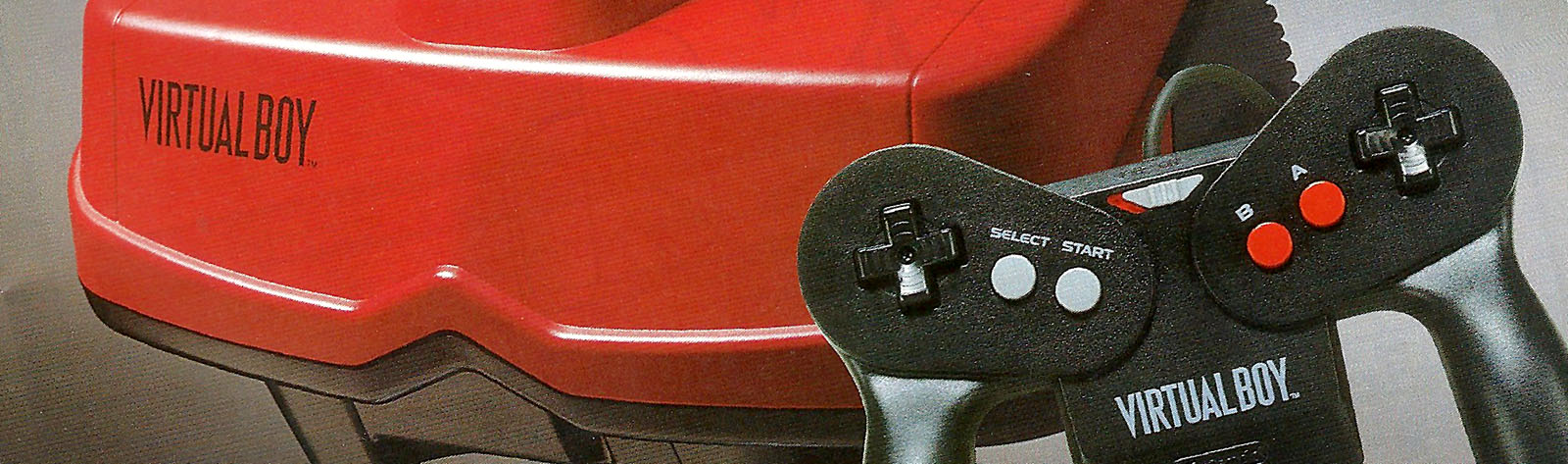


I remember somebody point that out quite some time ago, never got to try it for myself until recently. I only have one dust cover, the holder on the VB does work reasonably well.
What? Mario’s Tennis is really easy. As said before, all you do is just hit the ball into areas where the computer opponents can’t hit it. A good one is to hit the ball onto the right side of the net, without going into out of bounds. Most computer opponents will try to hit the ball but will end up walking backwards following it, without hitting it.
As for hitting the ball yourself, the game is really forgiving in that regard. There’s a wide area of margin that is acceptable with most characters.
That would require reprogramming games to work with the internet adapter. Most people have flashboys, so I guess that’s not a big issue. Still, the big problem is developing a wireless internet adapter. Not to mention having to build it and sell it for a decent price.
I think the market is too small for this sort of thing. One could definitely make a proof of concept plug-in for the link port though.
There’s also the other option, solder wires between the two Virtual Boys.
Probably a flatblade screwdriver, just be careful about it, but keep in mind that film is rather thick. Just scrape some off, then try tinning the via, and scrape/tin until you can.
I have also tried a hair dryer, overall the soldering method still looks better (as long as you don’t end up destroying the ribbon cable). Still, if it’s the only option, what worked best is holding the ribbon cable in place with pliers or something, then hitting the ribbon cable with high heat. The glue section being too hot to touch should be enough to get the glue gooey. Then you should find something to clamp and press down the ribbon cable. I have a quick grip set of vicegrips, very handy for Famicom cartridges. I haven’t tried it but it would probably do much better than other lousy methods I’ve tried. I’m not sure when you would want to apply some electrical tape to add some reinforcement. In fact, I wonder if it insulates the original ribbon cable glue.
On the one Virtual Boy I’ve tried this method on, the right display is fine while the left has the occasional error, usually horizontal lines… *sigh*. At least I can play Virtual Boy games.
The sunfaded Nintendo Power #1 is a nice touch.
I still say the Virtual Boy system looks really slick, with a lot more style than the USA Super NES, that’s for sure. How often do you ever see a red and black console?
Happy New Year! I took a nap earlier, so I should be able to play some New Years Virtual Boy.
Previous post was made before I checked the mail.

I’m just speachless really, I can’t thank MineStorm enough, this was really, REALLY nice of you! Man I’m gonna be glued to the Virtual Boy for hours.
Merry christmas all of you! I will find some way to give back to the community in the future. You guys are awesome. 🙂

Thank you so much Chaz! I can’t wait to try these out when I have some free time. These give me an even bigger incentive to (somehow) obtain a properly working Virtual Boy. 🙂
Is there any way to hold the ribbon cable in place in case the whole thing heats enough to lift off the board? Or does that usually not happen, or is one supposed to just go slow across the pins?
I suppose it’s not an issue either way, solder in most cases cools very fast.
That’s exactly what I don’t want to happen again, the ribbon cable warping from the heat. So just lead a ball of solder over the flux coated copper traces? That is, do not touch the surface with the iron tip right? Just lead the solder ball around? What’s a good way of getting the ball off without disturbing the traces? A solder sucker or just lead it to the edge?
Some new ribbon cables would be a massive help. I’d be able to repair one of my VBs, which needs a new pair.
To the people who have done the solder repair, have you had any success just melting/burning away the laminate at low temperature while tinning/soldering the traces? I got a third Virtual Boy (I must be crazy) and am thinking of attempting the soldering fix again. However, this time I’d be super ultra careful not to move the traces.
Will the ribbon cable suffer from any kind of heat? Or does it hold up okay with mild heat on each individual copper trace?
Merry Christmas everyone! A couple users gave me some VB games, I’m still speechless and can’t say thank-you enough. You guys are awesome! 😀
The quantities are probably well under 10,000 per game, that’s a generous estimate. Information like this is barely ever leaked out, for any platform.
I wonder how many of the common titles there are, like Mario’s Tennis (cart/manual), Virtual League Baseball, V-Tetris and Vertical Force (JP). Probably in the hundred thousands?
Any progress on making new ribbon cables? I could still use a pair for the Virtual Boy unit featured in the first post.
In the (partially remembered) words of Miyamoto, a good game is only delayed for a short time. A rushed (and bad) game is rushed forever.
I think extending the time limit is a good idea.
So it’s kind of like 3D Breakout then? I do like Air Hockey / Tennis (I end up playing lots of Mario’s Tennis). If I get a FlashBoy I’ll try out Space Squash. Thanks for the recommendation.
Looks like it’d be a FlashBoy for me then. Sure sucks about those mask ROMs though.
DogP wrote:
No… unfortunately the VB used the smaller 44 pin TSOP II (not the standard 44 pin SOP), which is a pretty uncommon package type for any chip… and seemingly nonexistant for flash ROMs. Here’s a zip with the datasheets: http://www.goliathindustries.com/vb/download/vbrom.zip . And yeah, they’re 5V devices.
DogP
Ah, I see. Well, if the package wasn’t an issue, would a 44pin SOP chip still work? I’m thinking a 3.3v chip might not work, depends how the data/address lines hold up. One can sneak by with 3.3v chips on SNES carts with a SA-1 co-processor, but the voltages involved are less than 5v in that case (normal SNES games are 5v all the way).