



 Benjamin Stevens
•
Topic:
Happy Three Kings day..oh and btw..Faceball: Remastered
Benjamin Stevens
•
Topic:
Happy Three Kings day..oh and btw..Faceball: Remastered
thunderstruck wrote:
I feel like someone should play-check the levels (Ben, I’m looking in your direction!) to make sure the levels are well ballanced.
If you want me to play test your mazes, I am definitely up for that. 🙂
Dude… I seriously got chills as I read this. Thank you so much for this!
This truly deserves to go down on the webpages of Virtual Boy history as a momentous occasion!
A big question arises in my head, though:
Why in the world would the password save the max value and not the score? The developers must have had some purpose for the max value, which never made it into the version of the game that got commercially released, unless it was just so that a player could say to his friends, “Hey, check out this max value I got. Here’s the password to prove that I got it,” instead of “hey, check out this score I got, here’s the password to prove that I got it.”
Guy Perfect wrote:
Distributing or selling commercial games, even if translated, is very illegal. Don’t do it. I won’t allow it to happen.
Dude… do you really want to be “that guy”?
Yeah, the exceptionally high price for a sealed Jack Bros. is the primary reason why it is the only sealed North American VB game that I do not have in my collection. It is still possible to get a CIB Jack Bros. in very good condition for $200 to $300 on Ebay. So when you look at it from the proper perspective, if you purchase a sealed Jack Bros. for $1,000.00, you are essentially paying $700.00 for an official plastic wrap.
Just giving you a heads up on the expected price you’d need to pay to get it. I’m pretty sure I also saw a sealed Jack Bros. sell for $800 after the aforementioned one. Basically, if you ever see a Buy-It-Now for a sealed Jack Bros. that is under $1,000.00, you pretty much have to snag it up right away or it’s gone forever. And it is true, you will find more complete copies of Virtual Bowling available for sale than you will ever find sealed copies of Jack Bros.
Vertical Force is very import friendly for those who know English but don’t know Japanese. In the Japanese version of Vertical Force, the “Important: Read Instruction and Precaution Booklets Before Operating” screen appears in both English and Japanese. The Auto Pause Function screen also appears in both English and Japanese. From that point on, the rest of the game is fully and only in English, including the end credits when you beat it. As you said, there isn’t any story in the game, so that just leaves the menus at the start of the game and the very little score text and new level text and such that appear at the end of each level and start of each new level all in English only.
UncleTusker wrote:
My needs…
Jack Bros SEALED
I hope you are prepared to pay top dollar for a sealed Jack Bros. I saw one sell on Ebay not too long ago for over $1,000.00.
Streex wrote:
“Cool. Are you printing out manuals too with the box?”
I sent a finalized Faceball instruction booklet to UncleTusker, to be used for this project, so a printed version of that instruction booklet should be included with the box.
From what I’ve heard, the seller has both regular and demo taps and seems to have a hard time noticing the difference, so for anyone interested: send the seller a message and make sure you know you’re getting a demo tap before committing to buy.
HorvatM wrote:
I’ve thought about hacking the ROM to fix this, but the code is such a mess that I can’t promise anything.
Hey HorvatM, have you found anything in the code of Virtual Lab that lets us know what the purpose of the numbers at the end of each level were supposed to be? Is there evidence in the code that these numbers truly were supposed to be used as a password to save the game?
Some important things to note are that the Japanese version of Virtual Fishing was released in Japan on October 6, 1995. The Virtual Fishing article that appears in January 1996’s issue of Nintendo Power was likely written no earlier than sometime in November of 1995, so that it could be published and sent to Nintendo Power subscribers sometime in December of 1995 (Nintendo Power subscribers were used to getting the latest issue a month early). Thus, this article should have been written after Virtual Fishing had already been fully finished and released for a month in Japan, and yet the writers had an unfinished copy that was sent to them and which they were writing about, while connecting it to THQ, who should have been the ones to release it in North America. This is very strong evidence of the fact that they were looking at THQ’s North American version of the game, because if they were simply looking at the Japanese version, it should have been completely finished by that time. This also seems to indicate that THQ was going to do more with the game than simply translate the Japanese text into English, because surely that would have been easy to do if they had received the original source code from Pack-in-Video Co. Ltd., and there would have still been a fully finished game with, perhaps, missing or Japanese text. It seems, however, that THQ was either making very significant changes or else remaking the game from the ground up.
Yeah, the fact that Nintendo Power said they got an early version of the game and showed clear screenshots of it, which they likely created themselves by putting the cartridge in their Video Boy and then creating screen captures, sure is good enough evidence for me.
Okay, Virtual Fishing (North American Version) gets added to the list:
1. Dragon Hopper
2. Mansion of Insmouse (North American Version)
3. Polygo Block
4. Virtual Block
5. Virtual Bomberman
6. Virtual Double Yakuman
7. Virtual Fishing (North American Version)
8. Virtual Jockey
9. Zero Racers
Technically, any single game on the unreleased game list could be out there somewhere in some form (other than the ones for which we have heard from those who worked on the games that almost no coding at all was done for the games), but the games I mentioned stand above all the rest, since each game has good documented evidence that it was very much completed, such as a gaming magazine review of the game or an official flyer that was made and distributed for the game (remember, Faceball was only largely known by a flyer for a long time, and now we have it, so such could very well happen with any of the other “flyer games”) or evidence of a long period of development work done on the game, etc. Once I get done observing all the data in my Famitsu magazines, I hope to add some more games to the list that are very likely to be out there based on the documented evidence, and of course, I still hope to acquire more gaming data to expand the knowledge of this area as well, since I’m obsessed with such.
*EDIT:
Wait a minute, what all evidence exists for the fact that a prototype cart exists for the North American version of Virtual Fishing? I haven’t come across much, but if there is good evidence for it, then I’ll add it to my list.
ectoglow wrote:
wish we could get Dragon hopper, or Zero Racers. there are no more Unreleased games out there that we have access to, right? Do we have access to the US Version of Insmouth Mansion?
Here is a list of VB games, which are all possibly out there somewhere in some completed state, but which are still not available to everyone:
1. Dragon Hopper
2. Mansion of Insmouse (North American Version)
3. Polygo Block
4. Virtual Block
5. Virtual Bomberman
6. Virtual Double Yakuman
7. Virtual Jockey
8. Zero Racers
Benjamin Stevens
•
Topic:
Happy Three Kings day..oh and btw..Faceball: Remastered
thunderstruck wrote:
Benjamin Stevens jumped in and is now helping me by designing 2 stages. This is great because that way I also have a new game (well, a half game) to look forward to.
I sure hope that people want more enemies, larger levels, and a much tougher challenge, because that is exactly what every maze across my 2 stages is going to deliver. I’m trying to make them in such a way that a player will likely have to move as quickly as possible the whole time and utilize the controls as well as the items to their full potential in order to win. Right now, it is pretty tough to beat any stage and have more than 30 seconds left on the timer (if playing on hardware). I myself actually get pretty angry at my own game, but hey, that’s good replayability, right? 😉
Well, I did mean every single Japanese unreleased game, but perhaps I overlooked a few. To be more specific, none of these unreleased games appeared on any of the release schedules:
3D Tank
Donkey Kong Country 2
Dragon Hopper
GoldenEye
Mighty Morphin Power Rangers
VB Mario Land
Worms
Zero Racers
I should have just two more batches of scans containing VB-related stuff coming from all the 1995 Famitsu Magazines. First, I plan to go through all of them again very slowly and carefully soon, trying to spot any pages containing VB stuff on them that I missed the first time. Once I get all of those scanned, I’ll add them to the Famitsu Magazine Virtual Boy Coverage thread. Then, for the second batch and as a fun little project, I plan to scan all of the Virtual Boy sections on the Release Schedule pages and make a large collage out out of all of them and also include interesting facts that can be learned from observing the data. Right now, I will let it be known that every single unreleased game that appears on this site, with the one exception of “Jump Dragon/Dragon Hopper,” appears on one of the Release Schedule pages of the 1995 Famitsu Magazines. Unfortunately, there is no Virtual Boy game on the 1995 Famitsu Magazine Release Schedules, whose name does not already appear on this site, so if there is still some unreleased game whose name is largely unknown up to now, it may appear on the release schedules of the early 1996 Famitsu Magazines, but I can’t say for sure. Nevertheless, with the Famitsu Magazine being published on a weekly basis, I believe that the data contained across all of the release schedules will give us good insight into the development history of the games, such as the approximate time period in which the developers changed a game’s working title and decided upon the actual release title, or the approximate time period when an unreleased game became conclusively canceled (since it no longer appeared on the weekly release schedules), etc. I know that at least I myself will find all this to be very interesting anyway.
A couple questions for you:
Is the instruction booklet for Blox a complete instruction booklet with all necessary instructions for the game?
If you still have the original computer files that you created for the box art and instruction booklet for Blox, would you be willing to send those files to UncleTusker, so that they could be used for a future limited production run of Blox?
Thanks.
GameJunkie wrote:
No one that i know has a cart. I played it at E3 back when Nintendo was promoting it.
That’s very cool that you got a chance to play it. I have a few questions about it, if you can answer them for me:
1. Did you, by any chance, see any of the random spells contained in the game and/or use the spells? If so, what were the spells and/or what did they look like or do when used?
2. Did you happen to find any of the hidden treasures in the game besides star coins? If so, what kind of treasures were they?
3. Did you come across enemies? If so, what did each look like?
I know it’s been a long time, and you might have a hard time recollecting such things, but I figured hey, it’s worth a shot. 🙂
Kirbendo wrote:
I don’t know if this has something to do with the topic, but I got some days ago a Virtual Boy in Animal Crossing: New Leaf. 🙂 Here’s a screenshot :
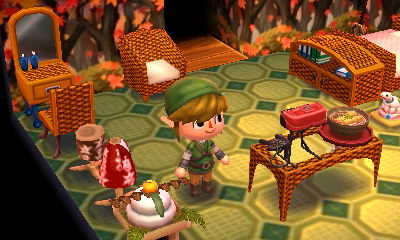
Cool! Did you buy it from one of the sellers on Yahoo Auctions Japan? There are a few listed for 200 yen each.
http://page16.auctions.yahoo.co.jp/jp/auction/u45889230
Benjamin Stevens
•
Topic:
Happy Three Kings day..oh and btw..Faceball: Remastered
Dor-Si wrote:
Anyone here play the original Turok on N64 or Turok 2 and remember how crazy the default controls were?
Oh yes, I played Turok: Dinosaur Hunter on the Nintendo 64, but I actually found Turok’s controls to make perfect sense. In fact, the controls were so intuitive to me that I always had to alter GoldenEye 007’s default control scheme to the control scheme that matched Turok’s one and only control scheme any time I would ever play GoldenEye.
This actually brings up a very good point: If a game only has one control scheme, then the entire game is defined by its control scheme. The Turok control scheme is so famous (or “infamous,” depending on how one wants to look at it) that people still make reference to it when trying to describe certain possible control schemes that can be used in other games (primarily console games that must be controlled without using a mouse, of course). Turok only had that one control scheme, which had to be used throughout the whole game, so for every instant that you were playing the game and seeing what all the game had to offer, that control scheme was with you the whole time, and it was adding to or taking away from every single experience that you had throughout the whole game. But regardless of what one may have thought about the control scheme, that’s Turok. If you would change the one and only control scheme of Turok to a control scheme of some other first person shooting game, then the game would no longer be Turok; it would be the other game with a Turok skin on it, essentially. Of course, so that developers’ games no longer become defined by a control scheme, as was the case with Turok, many developers choose to create fully customizable controls for their games. In such cases, the controls can no longer be defining factors of the game, and thus, the controls can no longer make or break the whole game for a player, since the player can make the controls whatever he or she feels are most comfortable. Despite this, some developers still choose to implement one control scheme for the whole game, so those developers want their game to be defined by that control scheme, and if one later changes the control scheme of that game, then the game is essentially turned into a completely new game with the original game’s skin on it.